
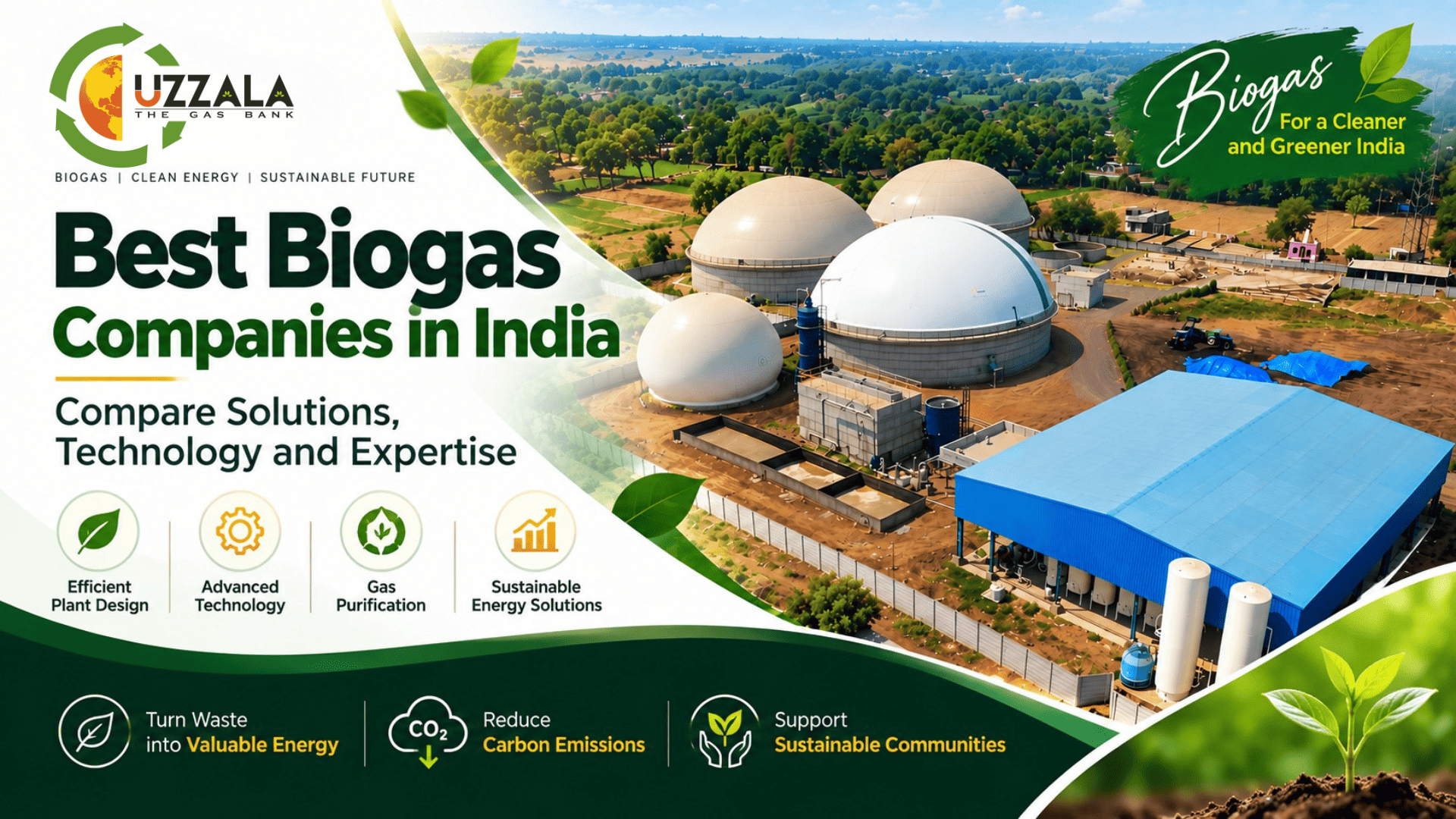
Best Biogas Companies in India: Compare Solutions, Technology and Expertise
Choosing the Best Biogas Companies in India requires more than comparing equipment prices or company names. Businesses planning renewable energy projects should evaluate feedstock suitability, digestion technology, plant capacity, gas purification, project execution, and long-term technical support. The right technology partner can help convert biodegradable waste into useful energy, Bio-CBG, Bio-CNG, and potentially valuable organic by-products.
India's focus on renewable energy, waste management, and resource recovery has encouraged agricultural enterprises, dairy farms, sugar mills, food-processing industries, and waste-management companies to explore biogas projects. However, every project has different technical and commercial requirements.
Some facilities need biogas for heating or electricity generation, while others require advanced gas upgrading to produce biomethane. Understanding these differences helps businesses evaluate Biogas Plant Manufacturers in India, EPC companies, technology providers, and operation and maintenance specialists.
This guide explains the major types of biogas companies, the technologies they offer, and the factors businesses should consider before selecting a project partner.
Why Biogas Companies in India Are Gaining Attention
Biogas is produced when microorganisms break down biodegradable materials in the absence of oxygen. The gas generally contains methane, carbon dioxide, water vapour, and varying quantities of other components.
Depending on its composition and treatment, biogas can be used for thermal energy, electricity generation, or further upgrading into biomethane.
Businesses explore biogas solutions for several reasons:
-
Organic waste management: Process suitable biodegradable waste instead of sending all of it for disposal.
-
Renewable energy generation: Produce energy from locally available organic materials.
-
Bio-CBG production: Upgrade raw biogas to meet applicable biomethane fuel specifications.
-
Digestate utilization: Assess opportunities to use treated digestate, subject to its quality and relevant regulations.
-
Industrial resource recovery: Integrate waste treatment and energy production into industrial operations.
-
Potential cost savings: Evaluate whether feedstock availability, energy demand, and operating costs support a viable project.
The suitability of a biogas plant depends on feedstock characteristics, daily availability, site infrastructure, required output, and overall project economics.
Types of Biogas Companies: What Should Buyers Compare?
Not every company offering biogas equipment provides the same services. Some manufacture individual components, while others specialize in project engineering, equipment supply, construction, process technology, or ongoing plant support.
1. Biogas Plant Manufacturers
Biogas Plant Manufacturers in India manufacture or supply equipment used in anaerobic digestion and associated processes. Depending on their capabilities, their products may include digesters, gas holders, pumps, mixers, piping, gas treatment equipment, and supporting systems.
Before choosing a Biogas Plant Manufacturer in India, evaluate:
-
Equipment specifications and quality-control practices
-
Experience with similar feedstocks and plant capacities
-
Compatibility between major equipment components
-
Installation and commissioning support
-
Spare-parts availability and warranty conditions
A manufacturer's capabilities should match the technical requirements of your project rather than relying on promotional claims alone.
2. Biogas Plant Suppliers
Biogas Plant Suppliers in India may source equipment from manufacturers or coordinate the supply of different plant components. Their responsibilities can range from equipment delivery to broader system integration.
Ask whether the supplier is responsible for installation, equipment compatibility, commissioning, performance testing, and after-sales service. Confirm all inclusions and exclusions in writing.
3. Biogas EPC Companies
A Biogas EPC Company in India coordinates engineering, procurement, and construction within its contracted scope. Depending on the agreement, this may include process design, equipment procurement, civil and mechanical coordination, electrical systems, instrumentation, installation, and commissioning.
An EPC provider can be useful for businesses seeking coordinated project delivery. Before appointing one, review its engineering capabilities, project schedule, responsibilities, testing procedures, and commercial terms.
4. Turnkey Biogas Solution Providers
Turnkey Biogas Plant Solutions bring multiple project stages together under an agreed delivery arrangement. These may include feasibility assessment, engineering, equipment supply, installation, commissioning, operator training, and handover.
The term “turnkey” does not mean every provider includes identical services. Buyers should verify the precise scope, performance guarantees, exclusions, and handover requirements.
5. Biogas Technology Providers
Biogas Technology Providers in India may specialize in digestion, feedstock pretreatment, gas cleaning, purification, upgrading, or automation.
Their expertise becomes especially important when processing challenging feedstocks or producing gas that must meet specific quality requirements. Ask providers to explain why their proposed technology is appropriate for the material and intended application.
6. Biogas Plant Operation and Maintenance Providers
Biogas Plant Operation and Maintenance Providers support the continued operation of installed biogas and Bio-CBG facilities. Their services may include preventive maintenance, process monitoring, equipment inspections, troubleshooting, operator training, and technical assistance.
When comparing operation and maintenance services, consider:
-
Experience with the installed digester and gas-treatment technology
-
Availability of trained technical personnel
-
Preventive maintenance schedules and inspection procedures
-
Spare-parts and replacement-component availability
-
Process monitoring and fault-diagnosis capabilities
-
Operator training and operating documentation
-
Service response arrangements and maintenance costs
Effective Biogas Plant Operation and Maintenance can help identify operational problems early and support equipment reliability. Actual results depend on feedstock quality, plant design, operating practices, and the maintenance agreement.
Clarify whether support is available remotely, through scheduled site visits, or through a dedicated operating team. Discuss maintenance arrangements before purchasing the plant, not only after commissioning.
Key Biogas Digestion Technologies
Selecting an appropriate digester is one of the most important decisions in a biogas project. The process should be chosen according to feedstock composition, solids content, biodegradability, contamination, moisture, and operating conditions.
CSTR Digester Technology
A continuously stirred tank reactor, or CSTR, is commonly used in wet anaerobic digestion applications. Mixing helps distribute feedstock and microorganisms throughout the reactor and supports controlled process conditions.
CSTR systems may be considered for suitable cattle dung slurries, food-processing waste, selected industrial biodegradable residues, and other compatible wet feedstocks.
When evaluating a CSTR Digester Manufacturer, ask about mixing arrangements, heating requirements, feedstock preparation, retention time, instrumentation, maintenance access, and process controls.
Dry Digestion Technology
Dry Digestion Technology is designed for selected organic feedstocks with relatively high solids content. Depending on the system, it may be suitable for certain agricultural residues and solid organic waste.
Potential advantages include reduced dilution requirements for some materials. However, feedstock handling, pretreatment, moisture management, and gas yield depend on the selected process and the material being processed.
A feedstock assessment should be completed before choosing a dry digestion system.
Plug Flow Digester Technology
A Plug Flow Digester moves feedstock through a reactor in a more directional flow pattern than a completely mixed tank. It may suit certain feedstocks with appropriate solids content and flow characteristics.
Important considerations include feedstock consistency, pumping requirements, mixing, reactor configuration, blockage risks, and the supplier's experience with similar materials.
There is no single digestion technology that suits every application. Technology selection should follow a technical assessment rather than a general recommendation.
Biogas Purification and Bio-CBG Production
Raw biogas typically contains methane, carbon dioxide, water vapour, and varying amounts of contaminants such as hydrogen sulphide. When the objective is to produce Bio-CBG or Bio-CNG, the project may require gas cleaning, upgrading, compression, monitoring, and suitable storage infrastructure.
A Biogas Purification System should be selected according to raw gas composition, flow rate, required product quality, and operating conditions.
H₂S Removal System
An H₂S Removal System reduces hydrogen sulphide in biogas. This contaminant can contribute to corrosion, affect downstream equipment, and create safety concerns.
Evaluate the inlet concentration, required outlet limits, treatment method, consumable life, replacement costs, and maintenance requirements.
Moisture Removal and Gas Conditioning
Moisture removal helps control condensation in pipelines and equipment. Gas conditioning requirements depend on the feed gas, downstream equipment, and final product specifications.
Ask the supplier to explain the required gas pretreatment and how the system will protect downstream components.
PSA Biogas Upgrading
PSA Biogas Upgrading, or pressure swing adsorption, separates gases using pressure-dependent adsorption characteristics. It can be considered when producing upgraded biomethane under suitable operating conditions.
Important factors include methane recovery, product gas quality, pressure requirements, energy consumption, controls, and operating complexity.
Membrane Biogas Upgrading
Membrane Biogas Upgrading uses selective gas permeation to separate methane from carbon dioxide and other components.
System suitability depends on raw gas composition, pretreatment requirements, membrane configuration, operating pressure, methane recovery, and required product quality.
When comparing PSA and membrane systems, request realistic performance estimates, utility requirements, maintenance information, and lifecycle cost assumptions. The most suitable technology depends on the project rather than the technology name alone.
Compression and Storage
Bio-CBG and Bio-CNG projects may require compression, storage, gas monitoring, and delivery infrastructure. These systems must be designed for the intended application and applicable safety and regulatory requirements.
How to Choose the Best Biogas Plant Manufacturers in India
Choosing a provider based only on a low quotation can create technical and commercial risks. Evaluate suppliers using consistent criteria.
Feedstock expertise: Confirm that the provider understands the characteristics and variations of your organic waste.
Technology selection: Ask why the proposed digester, pretreatment, and gas-upgrading technologies suit the project.
Capacity planning: Check whether the proposed capacity reflects realistic feedstock availability and operating conditions.
Engineering scope: Confirm the responsibilities for civil works, mechanical systems, electrical equipment, instrumentation, and process engineering.
Performance guarantees: Review measurable criteria, test conditions, acceptance procedures, and contractual responsibilities.
Project references: Request verifiable examples of projects with comparable feedstocks, capacities, and output requirements.
Automation: Understand the proposed sensors, alarms, controls, process monitoring, and operating reports.
After-sales service: Review warranty terms, maintenance support, spare-parts availability, and operator training.
Commercial transparency: Ensure the quotation clearly states equipment inclusions, exclusions, utilities, consumables, commissioning, taxes, and additional costs.
A company should be able to explain its proposal clearly and support its technical recommendations with appropriate engineering information.
What Is Included in Turnkey Biogas Plant Solutions?
A turnkey project may coordinate several stages under one agreed scope.
-
Feasibility assessment: Review feedstock supply, site conditions, logistics, energy requirements, and preliminary project economics.
-
Feedstock characterization: Assess solids content, biodegradability, contamination, and other relevant properties.
-
Process design: Select the digestion system, gas-handling equipment, and treatment requirements.
-
Engineering and procurement: Specify and source equipment, instruments, electrical systems, and supporting components.
-
Construction and installation: Coordinate civil works, mechanical installation, piping, and electrical connections as contracted.
-
Commissioning: Test equipment and process systems against the agreed requirements.
-
Training and handover: Train operators and provide the documentation included in the contract.
-
Operation and maintenance: Provide the contracted inspections, preventive maintenance, and technical support.
Before appointing a provider of Turnkey Biogas Plant Solutions, clarify who is responsible for each stage and how completion and performance will be verified.
Industries That Can Benefit from Biogas and Bio-CBG Projects
Biogas technology can support different industries when suitable biodegradable feedstock is available consistently.
Dairy Farms and Livestock Operations
Animal manure may be suitable for biogas production, depending on collection methods, contamination, moisture, and process design. Digestate handling should also be included in the project plan.
Sugar Mills
Suitable pressmud and other biodegradable residues may be evaluated for digestion. Seasonal availability, material composition, storage, and transport costs can influence project feasibility.
Food-Processing Industries
Biodegradable production waste can be considered for anaerobic digestion. Cleaning chemicals, packaging, contamination, and variations in waste composition need assessment.
Agricultural Operations
Selected crop residues and other organic materials may be suitable, although some require pretreatment. Moisture, biodegradability, seasonal availability, and logistics all affect feasibility.
Municipal Organic Waste Projects
Municipal organic waste can be considered when suitable segregation and pretreatment systems are available. Plastics, metals, and other contaminants may affect plant performance and equipment reliability.
Commercial Kitchens and Food Markets
Food waste from commercial kitchens, markets, and similar facilities may support organic waste-to-energy projects. Reliable collection and removal of packaging are important considerations.
The availability of organic waste alone does not guarantee project viability. A feasibility study should establish the quantity, quality, collection cost, processing requirements, and expected energy output.
Understanding Biogas Plant Costs and Commercial Viability
The investment required for a biogas or Bio-CBG plant varies according to project size, feedstock, site conditions, process technology, and output specifications. An accurate estimate requires project-specific information.
Major cost factors include:
-
Daily feedstock processing capacity
-
Feedstock preparation and pretreatment
-
Digester design and civil construction
-
Gas cleaning, purification, and upgrading equipment
-
Compression, storage, and delivery infrastructure
-
Electricity, water, heating, and automation requirements
-
Site development and utility connections
-
Safety systems and regulatory compliance
-
Commissioning, operator training, and maintenance support
Revenue or savings may depend on energy use or sales, biomethane offtake arrangements, waste-treatment agreements, digestate quality, and applicable incentives.
Before investing, assess feedstock supply, expected gas production, internal energy consumption, operating expenses, product offtake, digestate management, and financing requirements.
Ask the provider to explain the assumptions behind production estimates and financial projections. A responsible evaluation should consider operating risks, changing feedstock quality, plant availability, and maintenance costs.
Why Consider Uzzala Bio Energy Solutions?
Uzzala Bio Energy Solutions is a company to consider when exploring biogas, Bio-CBG, Bio-CNG, and organic waste-to-energy projects. Prospective customers should assess the proposed technical scope against their feedstock, processing capacity, site conditions, and intended output.
Depending on project requirements and the agreed scope, areas for discussion may include:
-
Biogas and Bio-CBG project planning
-
Organic waste-to-energy solutions
-
CSTR, plug flow, and dry digestion options where technically suitable
-
Biogas cleaning and hydrogen sulphide removal
-
Gas purification and upgrading systems
-
Bio-CBG and Bio-CNG production infrastructure
-
Engineering, equipment coordination, installation, and commissioning
-
Operator training and post-commissioning support
When comparing Uzzala with other Biogas Plant Manufacturers in India and EPC providers, request a written proposal that explains the process design, equipment scope, expected utility requirements, project schedule, performance-testing criteria, and after-sales support.
Visit the official website to explore the company's services and discuss your project requirements.
Website: https://www.uzzalabioenergy.com
Phone: +91-82006 18329
How to Start Your Biogas Plant Project
Before approaching a biogas company, prepare the following information:
-
Type and estimated daily quantity of available organic waste.
-
Feedstock source, seasonal variations, and existing supply arrangements.
-
Site location, available land, water supply, and electrical infrastructure.
-
Intended output, such as raw biogas, heat, electricity, Bio-CBG, or Bio-CNG.
-
Expected gas consumption or potential product buyers.
-
Preferred project timeline and preliminary investment range.
-
Requirements for digestate management, emissions, safety, and regulatory approvals.
Sharing these details helps a provider assess the requirements and prepare a more meaningful preliminary proposal.
Frequently Asked Questions
1. How do I choose the best biogas companies in India?
Compare feedstock expertise, technology suitability, engineering scope, verifiable project references, performance guarantees, commercial transparency, and after-sales service. Request a project-specific proposal rather than relying only on promotional claims.
2. What is the difference between a biogas plant manufacturer and an EPC company?
A manufacturer typically produces or supplies equipment. An EPC company coordinates engineering, procurement, and construction within its contracted scope. Some companies provide both services, but buyers should confirm the responsibilities included.
3. What should I look for in biogas plant manufacturers in India?
Evaluate technical design, equipment quality, process expertise, capacity planning, commissioning support, spare-parts availability, and experience with comparable feedstocks. Check whether performance criteria and testing responsibilities are clearly defined.
4. Which digester technology is best for a biogas plant?
CSTR, dry digestion, and plug flow systems suit different feedstock characteristics and operating conditions. Feedstock analysis and engineering evaluation should guide technology selection.
5. What is the difference between biogas and Bio-CBG?
Raw biogas contains methane, carbon dioxide, and other components. Bio-CBG is produced by upgrading biogas to increase methane concentration and meet the applicable fuel-quality specifications.
6. What are PSA and membrane biogas upgrading systems?
PSA separates gases using pressure-dependent adsorption, while membrane systems use selective gas permeation. The appropriate technology depends on gas composition, plant capacity, product specifications, energy use, and project economics.
7. Can agricultural waste be used for Bio-CBG production?
Some agricultural residues and organic wastes can be used, but suitability varies. Moisture, biodegradability, contamination, seasonal availability, and pretreatment requirements should be evaluated before selecting the process.
8. What affects the cost of a turnkey biogas plant?
Capacity, feedstock preparation, digester design, civil works, purification technology, compression, utilities, automation, site conditions, and commissioning scope all affect the total investment.
9. Why is hydrogen sulphide removal important?
Hydrogen sulphide can cause corrosion, create safety concerns, and affect downstream equipment. An appropriate H₂S removal system helps protect equipment and meet the gas-quality requirements of the intended application.
10. Do biogas plants require ongoing operation and maintenance?
Yes. Regular monitoring, equipment inspections, process control, preventive maintenance, and trained operators help maintain safe and reliable operation. Maintenance requirements vary by technology and plant configuration.
Finding the Best Biogas Companies in India starts with understanding your project's technical and commercial requirements. Feedstock quality, digestion technology, gas purification, engineering capabilities, financial assumptions, and ongoing service all influence the long-term performance of a biogas plant.
Businesses searching for Biogas Plant Manufacturers in India, a Biogas EPC Company in India, or providers of Turnkey Biogas Plant Solutions should compare written proposals, verify relevant experience, and evaluate suppliers against consistent criteria.
For businesses exploring biogas, Bio-CBG, Bio-CNG, or organic waste-to-energy projects, contact Uzzala Bio Energy Solutions to discuss project requirements and potential technical approaches.
Uzzala Bio Energy Solutions
Website: https://www.uzzalabioenergy.com
Phone: +91-82006 18329
Share your feedstock type, estimated daily quantity, project location, and intended gas output to begin a project discussion.
