
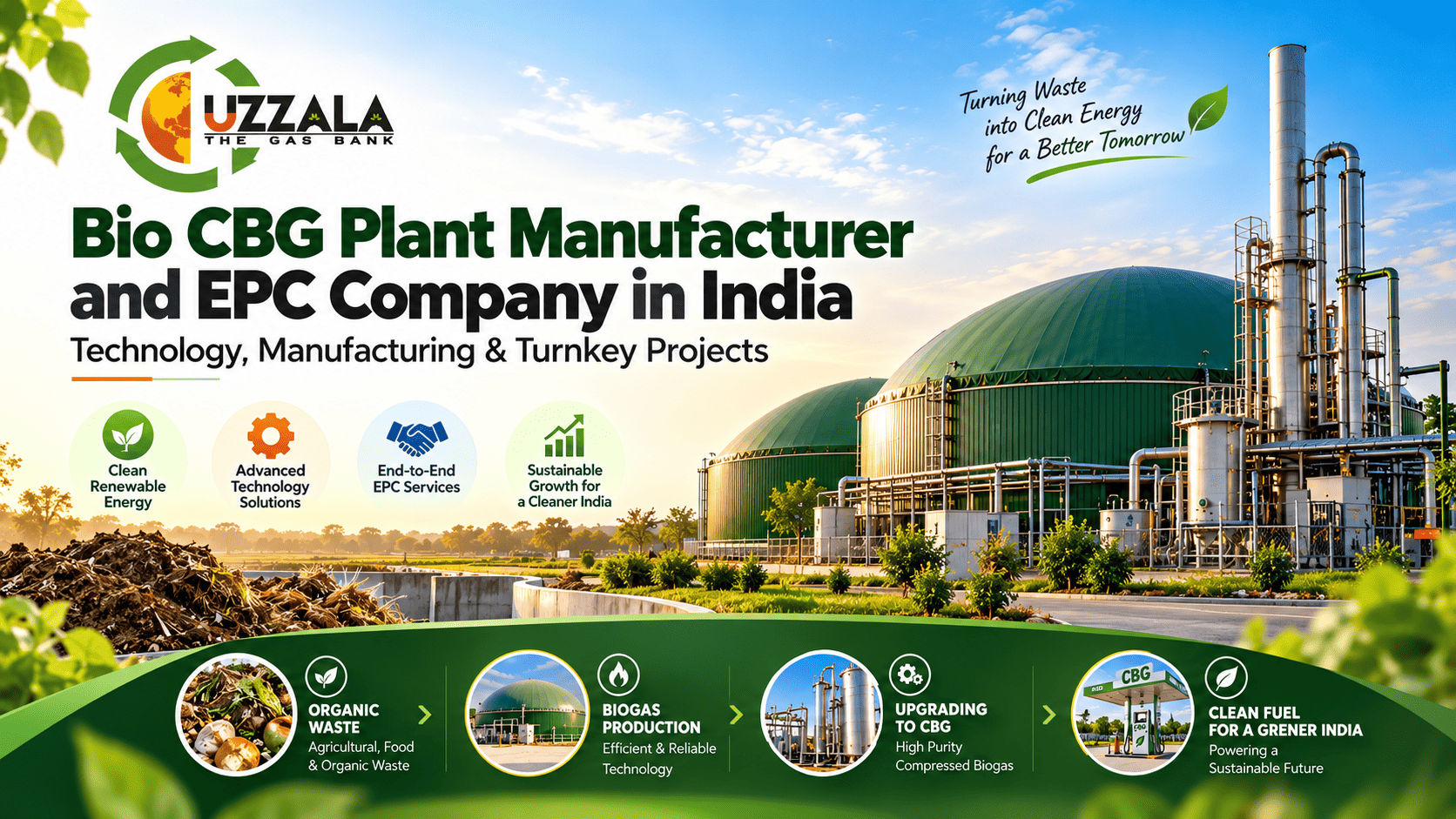
Bio CBG Plant Manufacturer and EPC Company in India: Technology, Manufacturing & Turnkey Projects
India's transition toward cleaner fuels is creating strong opportunities for businesses, industries, waste-management companies, and project developers to convert organic resources into renewable fuel. A well-designed Bio CBG plant can transform suitable biomass and organic waste into biogas, purify it to a high methane concentration, and compress the upgraded gas for use as Compressed Bio Gas (CBG).
However, developing a successful CBG project requires much more than installing a digester or gas upgrading unit. Feedstock characteristics, process technology, equipment selection, gas purification, compression, automation, civil infrastructure, commissioning, and long-term operation all influence plant performance.
This is why choosing the right Bio CBG Plant Manufacturer and EPC Company in India is an important decision for investors and project developers.
What Is a Bio CBG Plant?
A Bio CBG plant is an integrated renewable-energy system designed to produce biogas from biodegradable feedstock and upgrade that biogas into a cleaner, methane-rich fuel.
The overall process generally involves:
- Feedstock preparation
- Anaerobic digestion
- Biogas generation
- Gas cooling and moisture removal
- H₂S removal
- CO₂ and other impurity removal
- Biogas upgrading
- CBG compression
- Storage and dispensing or transportation
The technology and equipment configuration depend on the type of feedstock, daily capacity, moisture content, solids concentration, methane potential, project location, and intended end use.
For this reason, modern Bio CBG Technology should be selected according to the project rather than applying the same plant design to every feedstock.
Why Choosing the Right Bio CBG Plant Manufacturer Matters
A Bio-CBG project involves multiple engineering disciplines. A manufacturer with appropriate process and EPC capabilities can coordinate these requirements under one project framework.
A capable Bio CBG Plant Manufacturer in India should be able to support customers with:
- Feedstock evaluation
- Project feasibility assessment
- Process technology selection
- Plant capacity planning
- Equipment engineering
- Plant manufacturing
- Procurement
- Installation
- Gas purification
- Upgrading technology
- Compression systems
- Automation and instrumentation
- Commissioning
- Operation and maintenance support
This integrated approach can reduce coordination gaps between different suppliers and make Bio CBG Project Execution more structured.
Bio CBG Plant Manufacturing: From Engineering to Equipment
Bio CBG Plant Manufacturing is not limited to fabricating individual machines. It involves designing an integrated process system in which each stage works efficiently with the next.
The manufacturing and engineering process may include:
1. Process Design
The first stage is understanding the feedstock and determining the appropriate process configuration. Important parameters can include:
- Feedstock quantity
- Total solids and volatile solids
- Moisture content
- Organic loading
- Retention requirements
- Expected biogas yield
- Methane concentration
- Digestate characteristics
The information helps engineers develop a suitable plant configuration.
2. Digestion System
Anaerobic digestion is the biological core of a Bio-CBG plant. Microorganisms break down biodegradable material in an oxygen-free environment and produce biogas.
Depending on feedstock and project requirements, technologies such as CSTR digesters or dry digestion systems may be considered.
CSTR systems can be suitable for pumpable feedstocks, while dry digestion can be considered for selected high-solids organic materials.
3. Biogas Cleaning
Raw biogas generally contains methane along with carbon dioxide, hydrogen sulfide, moisture, and other impurities.
Before upgrading, the gas needs appropriate conditioning and cleaning.
H₂S removal is particularly important because hydrogen sulfide can cause corrosion and affect downstream equipment. Gas cooling, moisture removal, filtration, and other conditioning steps may also be incorporated according to the gas composition.
Modern Bio CBG Technology for Gas Upgrading
The objective of biogas upgrading is to remove unwanted components and increase the methane concentration to produce a fuel suitable for CBG applications.
Two important upgrading approaches include PSA purification and membrane technology.
PSA Biogas Upgrading
Pressure Swing Adsorption uses adsorption materials that selectively retain certain gas components under controlled pressure conditions.
A properly engineered PSA system can provide an efficient method of separating CO₂ from biogas.
The system may include:
- Gas compression
- Adsorption vessels
- Switching valves
- Control systems
- Gas monitoring
- Product-gas management
Membrane Biogas Upgrading
Membrane systems use selective gas permeability to separate methane from CO₂ and other components.
Membrane Biogas Separation technology can offer a compact configuration and can be integrated into projects where modularity and process flexibility are important.
The correct selection between PSA, membrane, or another upgrading configuration should depend on feed gas quality, capacity, required product specifications, energy considerations, and project economics.
CBG Compression and Storage
After upgrading, the methane-rich gas needs to be compressed for CBG applications.
A complete system can include:
- CBG compressors
- Gas storage cascades
- Pressure control systems
- Safety instrumentation
- Gas metering
- Filling or dispensing arrangements
- Control and monitoring systems
Compression equipment must be selected according to the plant's gas flow, operating pressure, storage requirements, and final application.
This is one reason a complete CBG Plant Manufacturer should consider the entire gas pathway rather than treating the upgrading unit as an isolated package.
What Does a Bio CBG EPC Company Do?
An experienced Bio CBG EPC Company can coordinate Engineering, Procurement and Construction activities from the initial project stage through commissioning.
Engineering
Engineering may cover:
- Process engineering
- Equipment sizing
- Piping design
- Electrical systems
- Instrumentation
- Automation
- Utility requirements
- Plant layout
- Safety systems
Procurement
Procurement involves identifying and sourcing equipment and components required for the project.
Depending on the plant configuration, this can include:
- Digesters
- Feed preparation systems
- Pumps
- Agitators
- Gas holders
- H₂S removal systems
- Gas upgrading systems
- Compressors
- Storage systems
- Electrical equipment
- Automation systems
Construction and Installation
The EPC stage brings engineering and equipment together at the project site.
Installation activities may include:
- Equipment erection
- Piping installation
- Electrical installation
- Instrumentation
- Gas-line integration
- Utility connections
- Control-panel installation
- Safety-system integration
Effective coordination at this stage is essential because Bio-CBG plants contain biological, mechanical, electrical, and high-pressure gas systems.
Turnkey Bio CBG Plant Projects
A Turnkey Bio CBG Plant gives the project owner a single coordinated implementation route.
Instead of independently managing multiple suppliers, the customer can work with an EPC partner responsible for integrating major project components.
A turnkey project can cover:
- Site and feedstock assessment
- Feasibility support
- Process design
- Technology selection
- Detailed engineering
- Equipment manufacturing
- Procurement
- Civil and mechanical coordination
- Plant installation
- Electrical and automation integration
- Testing
- Commissioning
- Operator training
- O&M support
This approach is especially valuable for customers who are entering the renewable-gas sector for the first time.
Feedstock-Specific Bio CBG Solutions
There is no universal feedstock solution for every Bio-CBG project.
Potential feedstocks can include:
- Municipal organic waste
- Food waste
- Agricultural residues
- Pressmud
- Poultry waste
- Agro-industrial organic waste
- Other suitable biodegradable materials
Each feedstock behaves differently during digestion. Factors such as particle size, moisture, solids concentration, biodegradability, contaminants, and seasonal availability can influence the plant design.
Therefore, feedstock assessment should be completed before finalizing the Bio CBG Plant EPC configuration.
Automation and Plant Monitoring
Modern CBG plants increasingly depend on automation for stable and controlled operation.
Automation can help monitor important parameters such as:
- Digester temperature
- Pressure
- Gas flow
- Gas composition
- Feed rate
- Pump operation
- Compressor conditions
- System alarms
- Process performance
A centralized control system can provide operators with better visibility into plant conditions and help identify operational issues quickly.
For larger installations, data logging and remote monitoring can further support performance analysis and maintenance planning.
Installation and Commissioning
Equipment installation is followed by testing and commissioning to verify that individual systems and integrated processes operate correctly.
Typical commissioning activities can include:
- Mechanical inspection
- Electrical testing
- Instrument calibration
- Pipeline leak checks
- Equipment trial runs
- Control-system testing
- Feed-system testing
- Digester commissioning
- Gas-system testing
- Upgrading-system trials
- Compressor testing
Biological commissioning can require additional time because anaerobic digestion depends on microbial activity and process stabilization.
Operation and Maintenance Support
Long-term plant performance depends on more than the initial installation.
An effective O&M program can address:
- Preventive maintenance
- Equipment inspections
- Process monitoring
- Gas-quality monitoring
- Cleaning
- Replacement of wear components
- Instrument checks
- Compressor maintenance
- Troubleshooting
- Operator training
Customers should therefore evaluate the after-sales and technical support capabilities of a CBG Plant EPC Company before selecting a project partner.
Why Uzzala Bio Energy Solutions?
Uzzala Bio Energy Solutions provides integrated solutions for customers looking to develop Bio-CBG and biogas projects.
The company's capabilities cover different stages of project development, including technology selection, engineering, manufacturing, installation, commissioning, automation, and operational support.
Uzzala can develop solutions around different organic feedstocks and process requirements, including systems involving:
- CSTR digesters
- Dry digestion
- PLUG FLOW digesters
- Biogas generation
- Gas holders
- H₂S removal
- Water scrubber systems
- PSA biogas upgrading
- Membrane gas separation
- CBG production
- Organic fertilizer systems
- Automation
- Turnkey EPC execution
The focus is on developing an integrated solution based on the customer's feedstock, project capacity, site conditions, and commercial objectives.
How to Start Your Bio CBG Project
If you are considering a new CBG project, the first step should be a structured feasibility assessment rather than immediately selecting equipment.
Customers should prepare information about:
- Feedstock availability – quantity, type, quality, and seasonal variation.
- Project location – land availability, utilities, road access, and nearby infrastructure.
- Required capacity – expected daily feedstock processing and CBG production.
- End-use strategy – transportation fuel, industrial use, captive consumption, or other applications.
- Digestate management – potential use or processing of the organic output.
- Project economics – capital investment, operating costs, revenue opportunities, and financing.
- Regulatory requirements – applicable approvals, safety requirements, and project-specific compliance.
After these factors are evaluated, the EPC partner can recommend an appropriate technology and project configuration.
Frequently Asked Questions About Bio CBG Plants
1. What is a Bio CBG plant?
A Bio CBG plant produces biogas from biodegradable feedstock through anaerobic digestion and then upgrades and compresses the gas to produce renewable compressed biogas.
2. How do I choose a Bio CBG Plant Manufacturer in India?
Evaluate the manufacturer's process expertise, technology options, manufacturing capabilities, EPC experience, commissioning support, automation capabilities, and after-sales service.
3. What is the role of an EPC company in a CBG project?
An EPC company coordinates engineering, procurement, construction, installation, testing, and commissioning so that different plant systems work as one integrated facility.
4. Which feedstocks can be used for Bio-CBG production?
Depending on the technology and project design, suitable feedstocks can include food waste, agricultural residues, pressmud, poultry waste, municipal organic waste, and other biodegradable materials.
5. What is the difference between CSTR and dry digestion?
CSTR systems are generally designed for pumpable feedstocks, while dry digestion systems are suitable for selected high-solids organic materials. The right choice depends on feedstock characteristics and project requirements.
6. Why is H₂S removal required in a Bio-CBG plant?
Hydrogen sulfide can be corrosive and harmful to downstream equipment. Appropriate gas cleaning helps protect equipment and improve gas-treatment performance.
7. What technologies are used for biogas upgrading?
Depending on project requirements, technologies such as PSA purification and membrane upgrading can be used to separate CO₂ and other impurities from biogas.
8. Does Uzzala provide turnkey Bio-CBG projects?
Uzzala Bio Energy Solutions provides integrated project capabilities covering engineering, equipment, installation, commissioning, automation, and related turnkey EPC requirements.
9. What information is needed for a Bio-CBG feasibility study?
Feedstock quantity and quality, site details, desired capacity, utilities, end-use requirements, and project objectives are important inputs for preliminary feasibility evaluation.
10. Why is feedstock analysis important before building a CBG plant?
Feedstock properties directly influence digestion performance, gas yield, equipment selection, process design, and overall project economics. Proper analysis helps establish a more realistic plant configuration.
Developing a successful Bio-CBG project requires the integration of biological processes, mechanical equipment, gas treatment, upgrading, compression, automation, and project engineering. Choosing an experienced Bio CBG Plant Manufacturer and EPC Company in India can simplify this process and provide a coordinated path from feasibility to commercial operation.
From Bio CBG Plant Manufacturing and technology selection to engineering, procurement, installation, commissioning, automation, and O&M, every stage can influence the plant's long-term performance.
For businesses and project developers planning a new renewable-gas facility, the right approach is to begin with feedstock assessment and feasibility, select technology based on actual project conditions, and work with an EPC partner capable of delivering an integrated solution.
Uzzala Bio Energy Solutions supports customers seeking reliable Bio-CBG, biogas upgrading, and turnkey EPC solutions tailored to their project requirements.
Uzzala Bio Energy Solutions
Website: www.uzzalabioenergy.com
Call: +91-82006 18329
Office: Ahmedabad, Gujarat, India
